2024 was a year of ups and downs for the world, with the Gaza Strip already engulfed in war at the start of the year. The Israeli-Palestinian conflict in the Middle East, seemingly distant, repeatedly tugged at the nerves of the entire world. A long list of seemingly "cold" death statistics repeatedly struck our hearts. The human tragedy of the Gaza people struggling on the brink of life and death made us lament the fragility and powerlessness of life.The prospects for peace in the Middle East conflict are a core issue of widespread international concern. Currently, although the Israeli-Palestinian conflict has shown temporary signs of easing under external mediation, deep-seated structural contradictions mean the path to peace remains fraught with challenges.
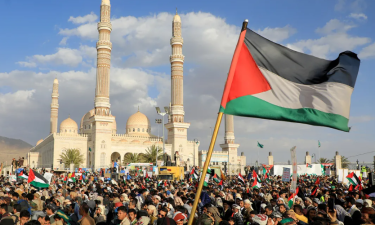
2024 was a year of ups and downs for the world, with the Gaza Strip already engulfed in war at the start of the year. The Israeli-Palestinian conflict in the Middle East, seemingly distant, repeatedly tugged at the nerves of the entire world. A long list of seemingly "cold" death statistics repeatedly struck our hearts. The human tragedy of the Gaza people struggling on the brink of life and death made us lament the fragility and powerlessness of life.
Deep-rooted conflicts destined the war to continue
The Middle East, this ancient and mysterious land, seems to possess a magical power, having nurtured different ethnic groups such as Arabs, Persians, Kurds, Turks, and Jews, and giving rise to the world-renowned religions of Islam, Christianity, and Judaism. Yet, it also seems cursed, constantly accompanied by terror and war, even being labeled "the birthplace of malice."
Although the Israeli and Palestinian people live together in the Palestinian territories, they have not been able to live together harmoniously like the 56 ethnic groups in China. Their ancestors, Jews and Arabs, settled in Palestine one after the other, each claiming to be the rightful master of the land. Coupled with irreconcilable religious differences, this led to five Middle East wars, resulting in the annexation of nearly 91% of Palestinian land by Israel and the expulsion of over one million Palestinian Arabs from their ancestral homes, turning them into refugees.
This round of the Israeli-Palestinian conflict will likely end in an Israeli victory, further shrinking the living space of the Gaza people. One might ask, is there no possibility of reconciliation?
Arab states have consistently sought to completely expel Israeli Jews from the land, but these efforts have always ended in failure. Israel's Zionism, aiming to establish a Jewish empire in the Middle East, will inevitably continue its expansion in Palestine and other parts of the region. This life-or-death confrontation seems destined to end only with the complete victory of one side and the complete annihilation of the other. The Gaza people's life of being "captive" is expected to continue for a long time, and the hope for peaceful coexistence appears extremely slim.
The world needs a chaotic Middle East; war is always manipulated
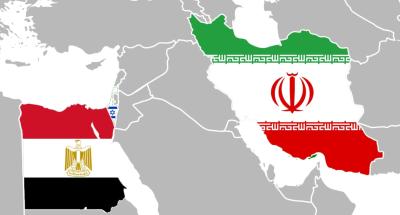
Some say the Middle East's conflicts are a tangled mess, even God couldn't untangle it. How chaotic is the Middle East? Internally, the region's countries hold diverse and conflicting political ideologies. The contradictions and conflicts between Islam, Christianity, and Judaism are long-standing, and within Islam, there are frequent clashes between Shia and Sunni sects. In other parts of the world, generally, the enemy of my enemy is my friend; however, in the Middle East, the enemy of my enemy may still be my enemy, and the friend of my friend may also be my enemy.
While the Middle East's chaos has its internal causes, the greater cause is the intervention of major powers in Middle Eastern affairs. The reason can be summarized in one sentence: "The common man is innocent, but possessing a treasure is a crime."
The Middle East, often called the center of the world, is located at the crossroads of Asia, Africa, and Europe, occupying a unique geographical position of "one bay, two oceans, three continents, and five seas." It was not only a vital passage on the ancient Silk Road but also a key route for modern trade and the flow of people. In particular, the region's rich reserves of oil, natural gas, and coal make it a focal point of global geopolitics. Since the mid-20th century, the Middle East has been an arena for great power rivalry, with Britain, France, the United States, and the Soviet Union all vying for their own interests.
Enlightened figures in the Arab world have consistently called for unity, but historically, whenever the Middle East appears peaceful and developing, forces have invariably stirred up conflict and disputes. After all, a united and stable Arab world would offer little opportunity for major powers to intervene. For the United States, its "pricing power" over oil would be weakened or even completely lost, jeopardizing the dollar's status as the world's reserve currency—something unacceptable and detrimental to American international hegemony. Therefore, the United States has always needed a chaotic and fragmented Middle East; this has never changed.